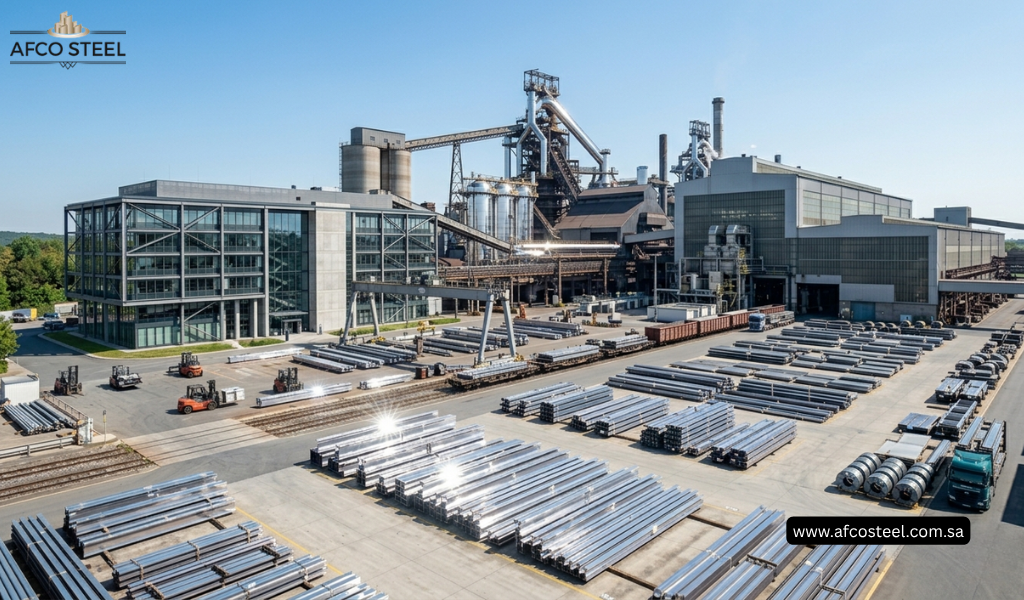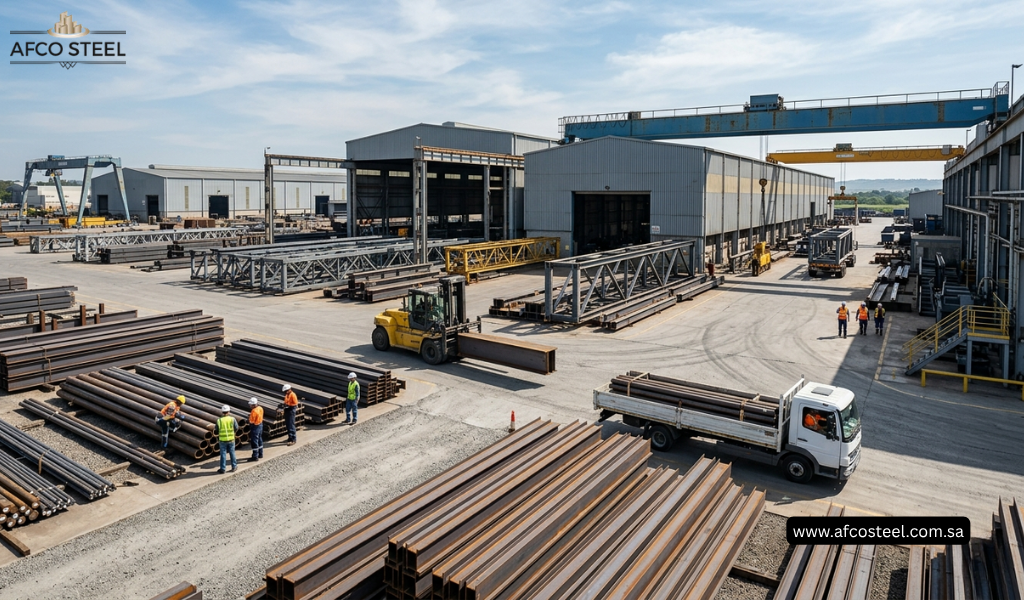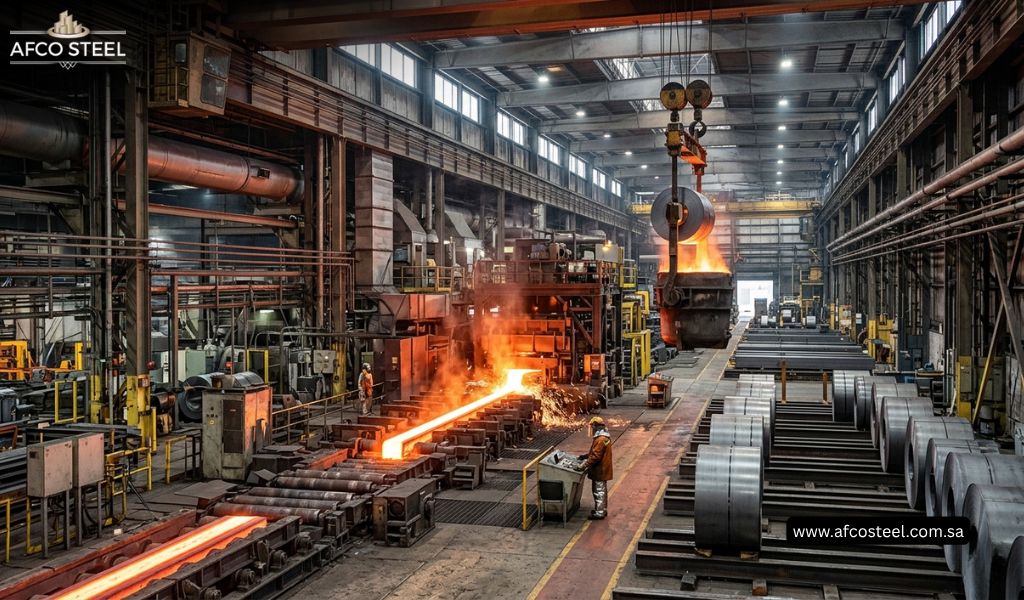
Over several decades the modern steel factory has changed dramatically. Today, an industry that had once required tons of manual labor has been driven by automation, precision engineering and breakthrough quality control systems. Today's steel-making plants are essential providers of exceptionally durable building materials for use in constructing the infrastructure, energy and industrial applications.
With global demand for high-quality steel continuing to rise, manufacturers are now working with innovative technologies that drive efficiency, safety, and sustainability upgrades. Major corporations such as Afco Steel are helping fulfill these industry needs through dependable steel solutions across various methods.
Quick Summary
-
Modern steel factories use automation and smart manufacturing technologies.
-
Steel products support construction, infrastructure, and industrial development.
-
Strict quality and safety standards ensure product reliability.
-
Advanced production methods improve efficiency and sustainability.
-
Leading manufacturers such as Afco Steel contribute to regional and international development projects.
What Does a Steel Factory Produce for Construction and Industrial Projects?
The modern steel factory, however, produces various types of products that serve the construction and industrial sectors. These products will be the backbone of buildings, bridges, warehouses, factories and energy facilities.
Common Products Manufactured
-
Structural steel sections
-
Steel pipes and tubes
-
Reinforcement bars
-
Steel plates and sheets
-
Steel coils
-
Customized fabricated steel components
They are generally used in commercial buildings, industrial plants, transport infrastructure and large civil engineering works.
Some other business that searches for a steel factory near me looks out for manufacturers who can prepare products as per their requirements, delivered on time and who meet the quality standards certification.
How Does a Steel Factory Ensure Quality and Safety Standards?
Quality and safety are essential in steel manufacturing because the products are used in critical structures that must perform reliably for decades.
Quality Control Measures
Modern factories implement:
-
Raw material inspections
-
Chemical composition testing
-
Mechanical strength testing
-
Dimensional accuracy verification
-
Non-destructive testing methods
Safety Standards
Manufacturers also prioritize workplace safety through:
-
Automated production systems
-
Employee safety training
-
Protective equipment requirements
-
Equipment maintenance programs
-
International safety compliance procedures
Companies such as Afco Steel invest heavily in quality assurance systems to ensure every product meets industry specifications and customer expectations.
How Are Steel Products Manufactured in a Modern Steel Factory?
The steel manufacturing process combines advanced machinery with precise engineering controls to produce consistent and high-quality products.
Step 1: Raw Material Preparation
Iron ore, recycled steel, and other materials are prepared and inspected before entering production.
Step 2: Melting and Refining
Materials are melted at extremely high temperatures and refined to achieve the desired chemical composition.
Step 3: Casting
Molten steel is shaped into billets, slabs, or blooms through continuous casting processes.
Step 4: Rolling and Forming
The steel passes through rolling mills where it is transformed into specific shapes, sizes, and profiles.
Step 5: Finishing and Inspection
Products undergo finishing treatments, surface preparation, testing, and final inspections before shipment.
Modern digital monitoring systems help manufacturers maintain precision throughout every stage of production.
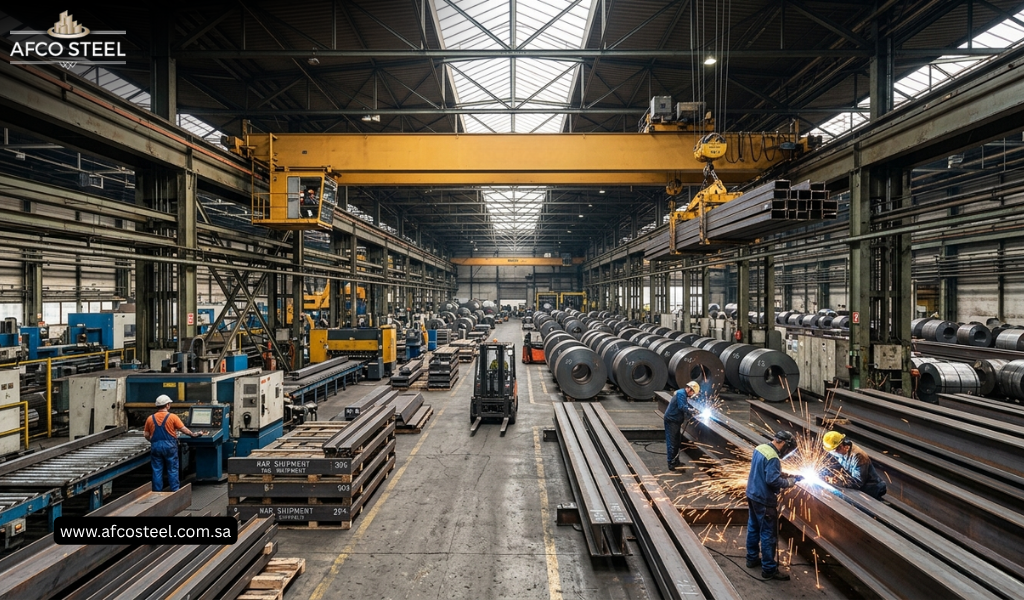
Why Are Steel Factories Important for Infrastructure and Industrial Development?
Steel factories are essential drivers of economic growth and modernization. Without steel production, many infrastructure and industrial projects would not be possible.
Key Contributions to Development
Infrastructure Expansion
Steel supports the construction of:
-
Highways
-
Bridges
-
Airports
-
Rail networks
-
Commercial buildings
Industrial Growth
Manufacturing facilities rely on steel for:
-
Machinery
-
Equipment
-
Warehouses
-
Energy facilities
Employment and Economic Impact
Steelmaking generates employment in manufacturing, engineering, logistics and building sectors.
This is especially important in regions experiencing rapid growth, including the Middle East. The increasing demand for a steel factory in Saudi Arabia reflects the country's ongoing infrastructure expansion and industrial diversification initiatives.
Likewise, each major steel producer in Saudi Arabia has a significant role to play in supporting critical national projects and economic development objectives. The companies that are searching for a reputable steel company in Jeddah, commonly focus on responsive production capacities, trusted quality certificates and serviceable alignment with projects.
Practical Information Table
|
Factor |
Traditional Steel Factory |
Modern Steel Factory |
|
Production Speed |
Moderate |
High |
|
Automation Level |
Limited |
Advanced |
|
Quality Control |
Manual inspections |
Digital monitoring systems |
|
Safety Standards |
Basic compliance |
Comprehensive safety programs |
|
Sustainability |
Higher waste generation |
Improved resource efficiency |
|
Product Customization |
Limited options |
Highly flexible production |
|
Data Tracking |
Minimal |
Real-time production analytics |
Also read:- How Steel Factories Shape Global Manufacturing: Challenges and Opportunities?
Key Innovations Transforming the Steel Industry
Smart Manufacturing
Advanced sensors and real-time monitoring improve production accuracy and reduce downtime.
Automation and Robotics
Robotic systems perform repetitive tasks with greater consistency and safety.
Sustainable Production Practices
Modern facilities focus on reducing emissions, recycling materials, and improving energy efficiency.
Digital Quality Management
Data-led quality systems assist manufacturers in detecting and correcting issues before goods are delivered to customers.
These advancements allow manufacturers like Afco Steel to remain competitive and provide reliable steel solutions for construction, industrial applications and more.
Conclusion
For a long time, work is a place where you produce something. Today, steel mills supply the materials required to build infrastructures, industries and economic growth through sustainable processes coupled with automation and sophisticated quality control.
From searching for a steel factory near me to assessing a steel factory in Saudi Arabia or even collaborating with a trusted steel company in Jeddah, opting for an experienced manufacturer can determine the success of any project. You may work with trusted companies like Afco Steel to access quality items, technical know-how, and reliable support for long-term performance in your projects.
FAQs about Steel Factory
1. What products are made in a steel factory?
A steel factory produces structural steel, pipes, tubes, reinforcement bars, plates, sheets, coils, and custom steel components for construction and industrial applications.
2. How does a steel factory maintain product quality?
Steel factories use material testing, quality inspections, mechanical testing, dimensional checks, and digital monitoring systems to ensure consistent product quality.
3. Why is a steel factory important for infrastructure projects?
Steel factories provide the materials needed for bridges, highways, airports, commercial buildings, industrial facilities, and other critical infrastructure developments.
4. What should I look for when choosing a steel company in Saudi Arabia?
Look for quality certifications, production capacity, project experience, technical expertise, safety standards, and reliable delivery performance when selecting a steel manufacturer.